|
Experiment Table CD4+ T lymphocyte counts and viral RNA
Neutralizing Antibody Assays
Peptide-binding Assays
|
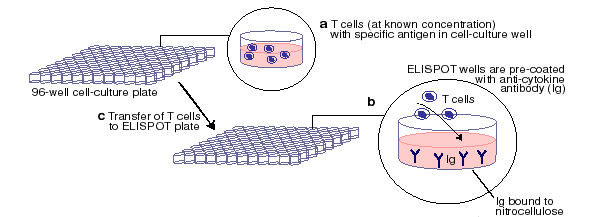
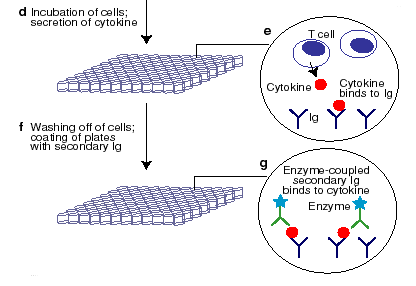
Synopsis: The role of the ELISPOT in this experment is to determine the ability of the immune system to recognize the wild type p11C epitope as compared to the mutant p11C and respond with production of interferon-gamma (IFN-g). The production of IFN-g indicates a positive response by the immune system to the epitope. Little or no IFN-g production indicates an escape from immune recognition by the epitope. Does the ELISPOT measuring the surface expression of components or intracelluar components of cells?
Procedure: 1. Plates of 96 wells were coated with 100ul each of 10ug anti-human IFN-g antibodies. 2. 2 x 10^5 peripheral blood mononuclear cells (PBMC) are added to the wells.
3. Varying concentrations of peptide (p11C or mutant p11C) are placed in the wells and then incubated for 18 hours. Would you expect to see the response measured by the ELISPOT grow or shrink with lower concentrations of peptides?
4. The wells were washed several times and then incubated with biotinylated rabbit anti-human IFN-g and streptavidin.
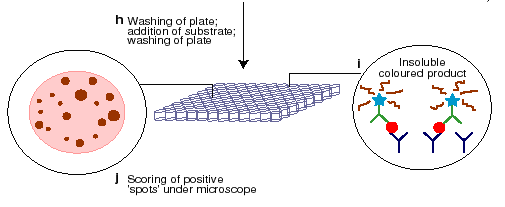
4. The NBT/BCIP chromogen is added next. 5. Data was collected as the number of Spot Forming Cells (SFC) per 106 PBMCs.
6. The spots will form around sites where IFN-g is present.
What are these spots indicative of?
What type of response would a high number of spots indicate?
|