 Under Construction!
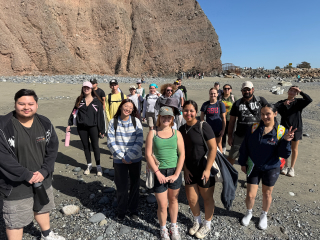
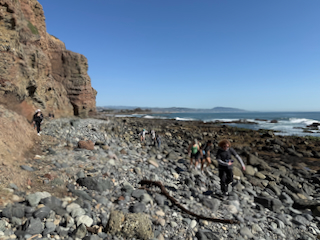
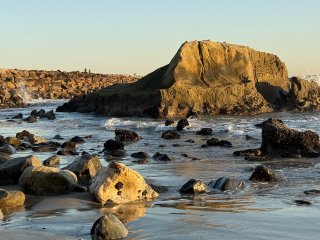
Dana Point, Orange Co., CA, January 31, 2026
-
| 
-
| 
-
|
-
| 
-
| 
-
|
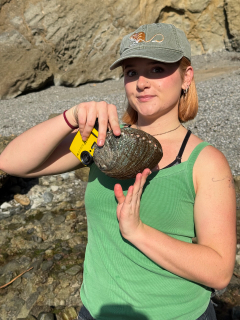
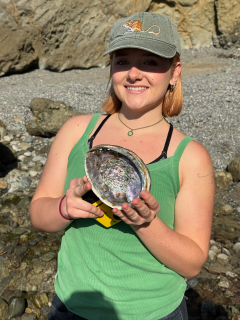
Haliotis fulgens (green abalone) - this is our most common intertidal
species of abalone. Note the distinctive shell sculpturing when the shell is not eroded.
| 
-
| 
-
|
-
| 
-
| 
-
|
-
| 
-
| 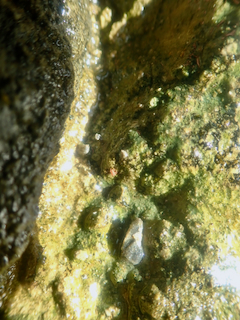
A bright red mite, Neomolgus littoralis (Linnaeus, 1758), which moves very fast and is hard to photograph (but see next image).
|
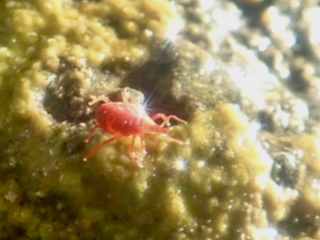
Neomolgus littoralis is nearly cosmopolitan mite (an arachnid) living in the intertidal splash zone.
There are only a few publications that I have seen, for example describing populations from Europe,
California, and Japan. There are no DNA sequence comparisons across its widespread populations, so it is possible that it is a species complex of similar appearing species.
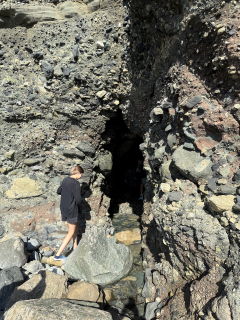
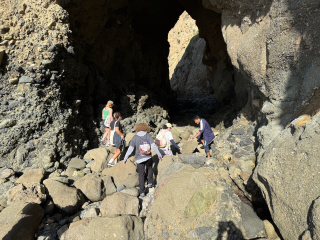
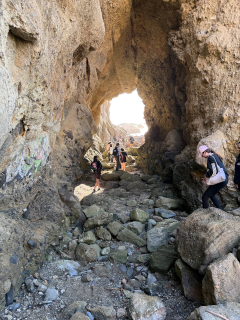
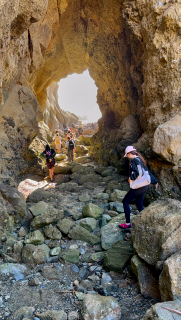
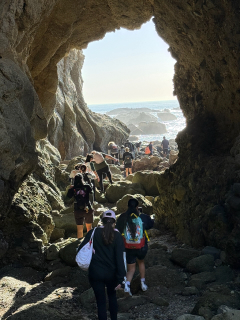
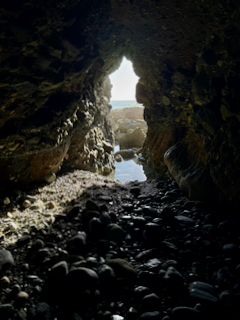
This bright red mite can be found on the walls of the sea tunnels we were walking through, and also can be found under rocks
or on drift kelp. It is mostly a predator. It has been observed eating insect larvae and nematodes. This is probably the best images I have taken of it.
It is about 3 mm long, and moves rapidly.
| 
-
| 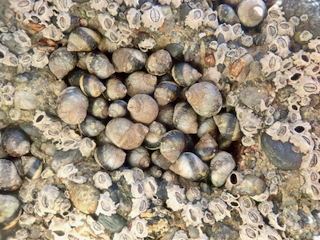
These Littorina keenae (eroded periwinkles) are surrounded by acorn barnacles (probably both
Balanus glandula and the smaller and brownish Chthamalus fissus).
|
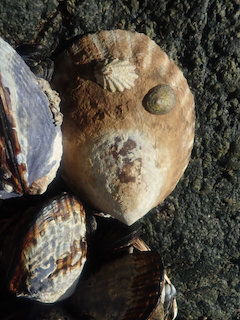
An owl limpet (Lottia gigantea) with two other Lottia spp. on its
shell, nestled against some California mussels (Mytilus californianus).
| 
-
| 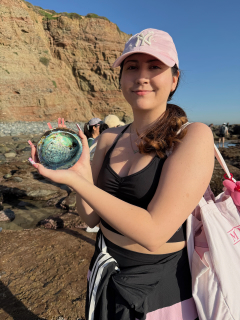
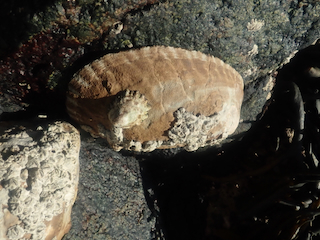
Another Haliotis fulgens (green abalone) shell that was quite colorful.
|
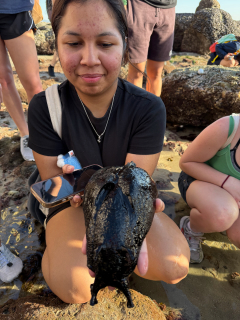
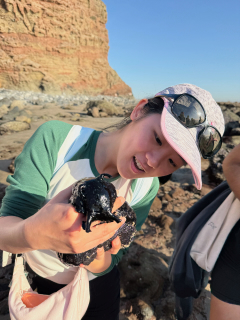
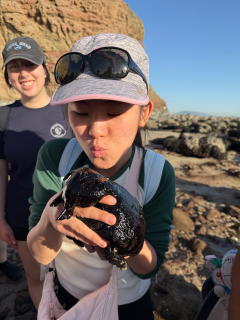
Aplysia vaccaria (black sea hare)
| 
-
| 
-
|
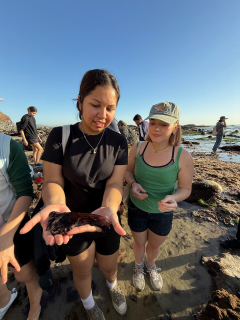
-
| 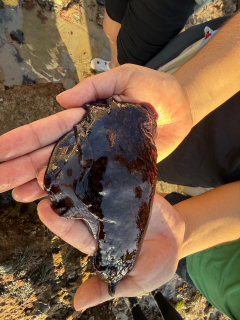
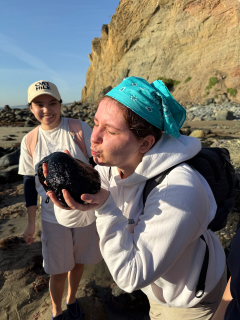
Aplysia californica (California sea hare)
| 
-
|
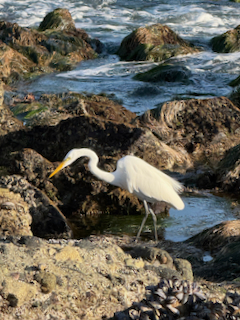
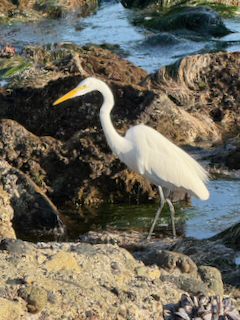
great egret
| 
-
| 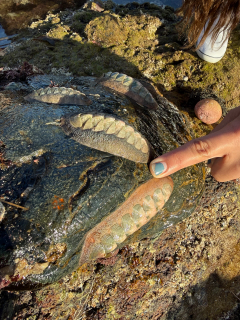
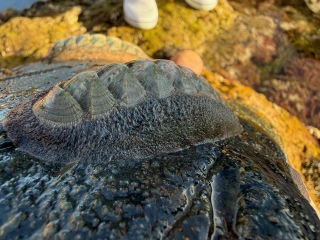
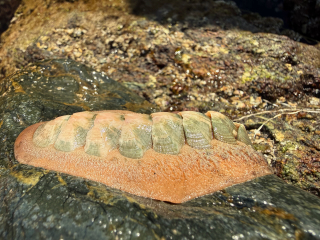
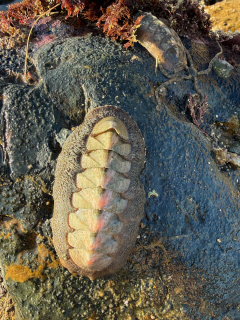
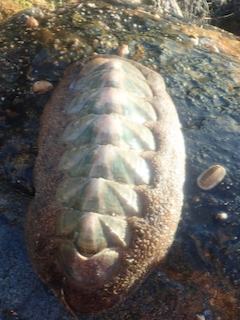
Stenoplax conspicua (conspicuous chitons)
|
-
| 
-
| 
-
|
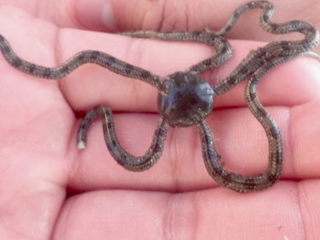
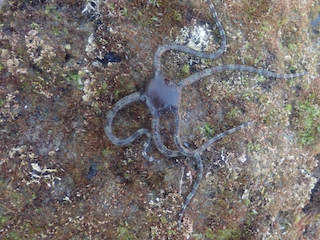
Ophionereis annulata (banded brittle star)
| 
-
| 
-
|
-
| 
-
| 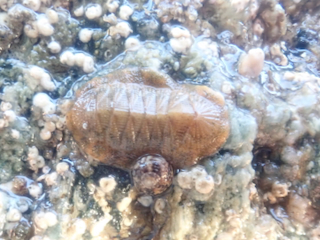
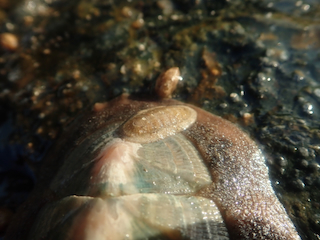
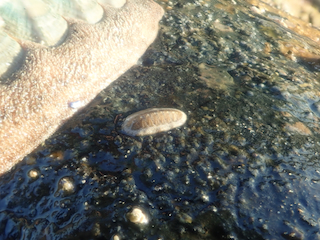
The chiton, Lepidozona pectinulata, is common in SoCal on the underside of rocks. On the
left it is dwarfed by a Stenoplax conspicua, but they can be perhaps 2 cm in length.
|
-
| 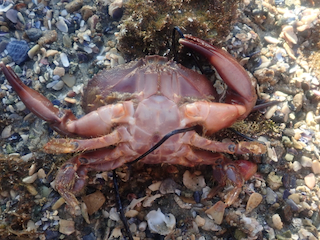
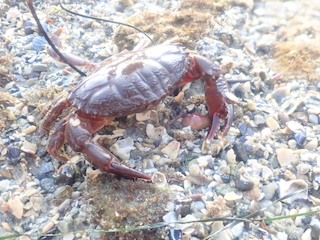
This is a female crab from the genus, Cancer. I expected it to be C. antennarius (Pacific
rock crab), but it seems to lack the red spotting on its underside and that species has more setae on the carapace. I should have gotten better images.
| 
-
|
Return to Biology 317 Fieldtrip Map or Bio 317 Field Marine Biology Home Page
Web page created on 2/4/26 using ShoresToWeb HyperCard stack by D. J. Eernisse © 2005-2009