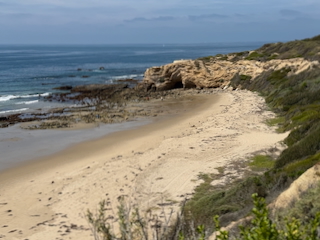
Treasure Cove
| 
-
| 
-
|
-
| 
-
| 
-
|
-
| 
-
| 
-
|
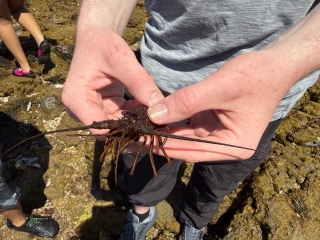
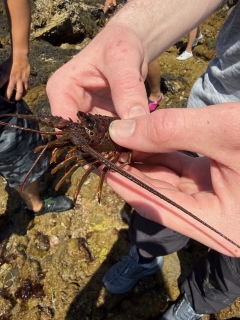
juvenile California spiny lobster (Panulirus interruptus)
| 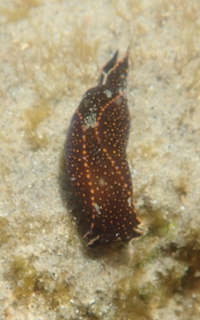
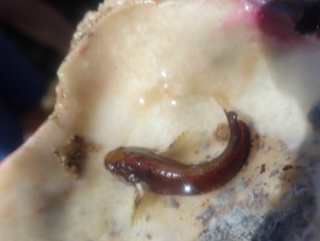
We saw several juvenile predatory cephalaspidean sea slugs, Navanax inermis (California aglaja).
They have a broad diet of especially other sea slugs.
| 
-
|
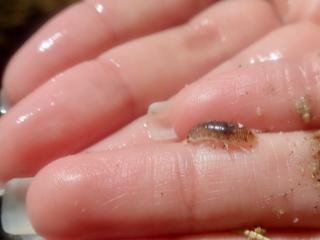
This isopod, Cirolana harfordi, is abundant in mussel beds and other
intertidal to shallow subtidal habitats.
| 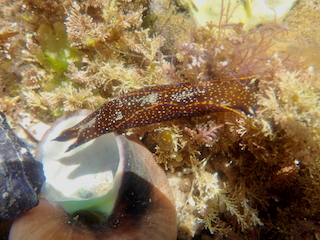
Navanax inermis
| 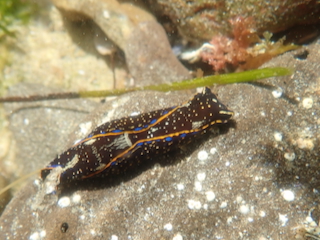
Navanax inermis
|
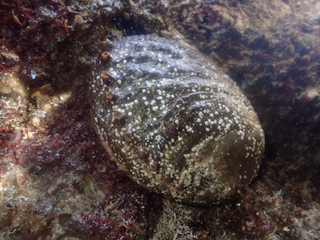
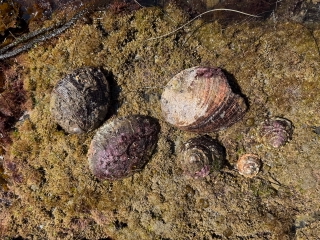
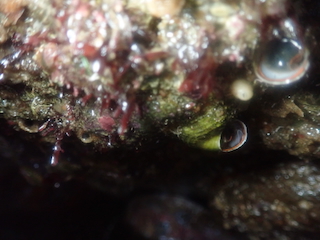
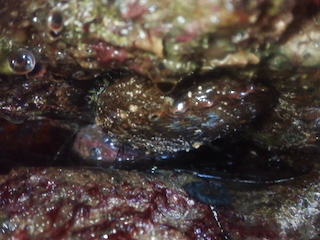
Live Haliotis fulgens (green abalones) were observed hidden under ledges.
| 
-
| 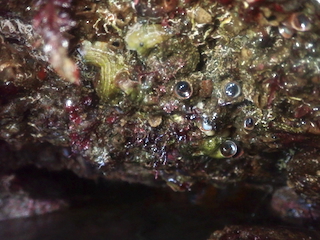
In southern California, it is possible that the decline of once abundant abalones, due to
historical over-harvesting and a more recent withering foot disease epidemic
allowed for an expansion of the vermetid tube snail populations, specifically Thylacodes squamigerus (scaled worm snails), which filled up former abalone
habitat with the calcareous tubes of living and past tube snails. This could hinder future abalone recovery.
|
-
| 
-
| 
-
|
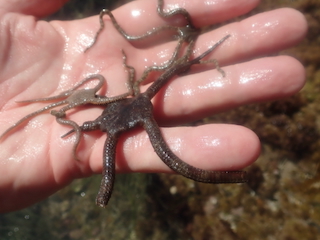
Three species of brittle stars, from front to back:
Ophioderma panamense
(Panama brittle star), Ophioplocus esmarki (smooth brittle star), and Ophionereis annulata (banded brittle star).
| 
-
| 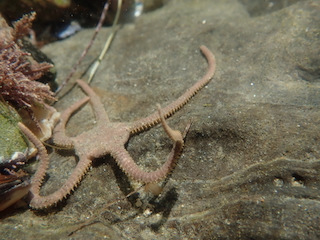
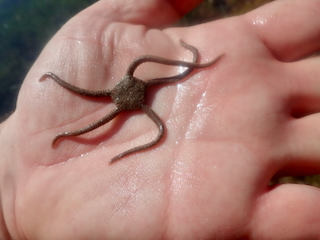
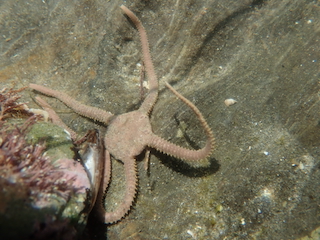
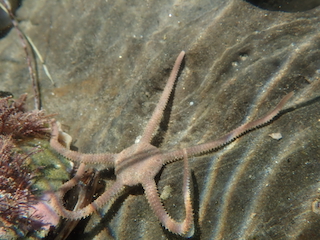
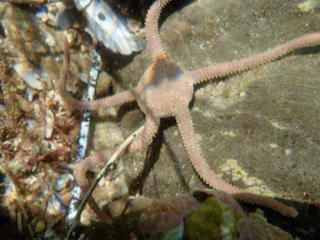
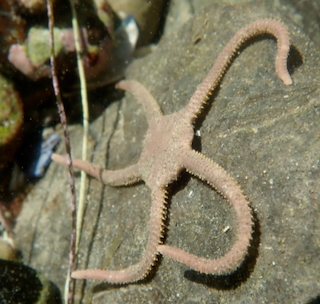
Ophioplocus esmarki (smooth brittle stars) have females that are
ovoviviparous brooders, which means that eggs hatch within their mom without any placental nourishment and eventually are released
as juveniles by live birth. Unlike this one, a brooding female would appear swollen.
|
-
| 
-
| 
-
|
-
| 
-
| 
-
|
-
| 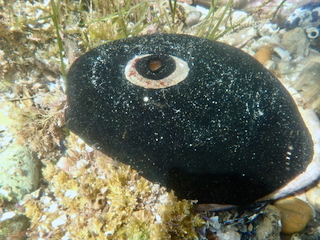
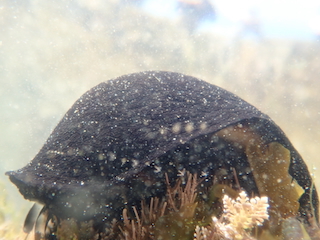
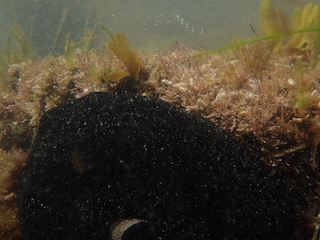
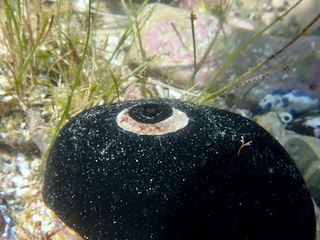
Megathura crenulata (giant keyhole limpet)
| 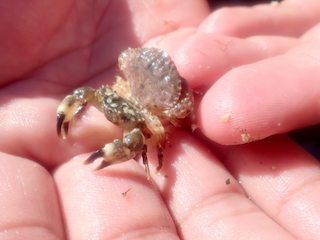
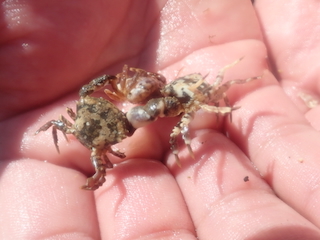
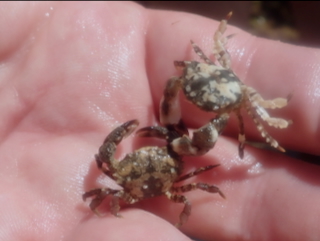
Back-to-back! L: Lophopanopeus bellus (black-clawed crab); R: Cycloxanthops novemdentatus
(ninetooth pebble crab)
|
-
| 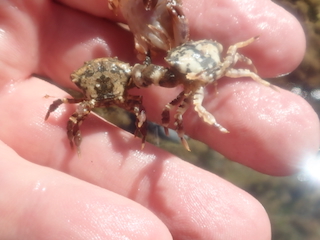
Lophopanopeus bellus (black-clawed crab)
| 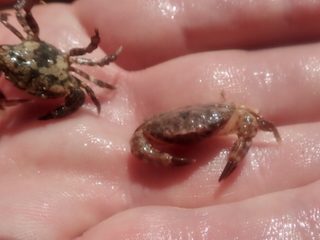
L: Lophopanopeus bellus (black-clawed crab); R: Cycloxanthops novemdentatus (ninetooth pebble crab)
|
-
| 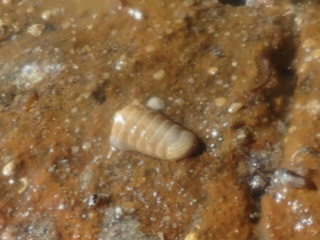
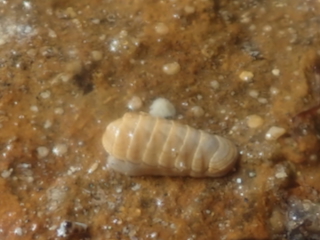
Leptochiton rugatus (red-footed chiton)
| 
-
|
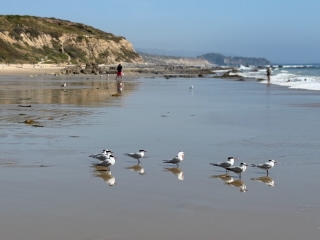
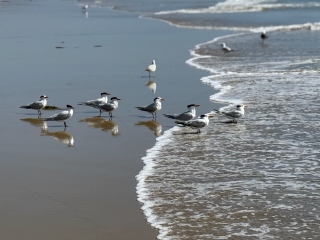
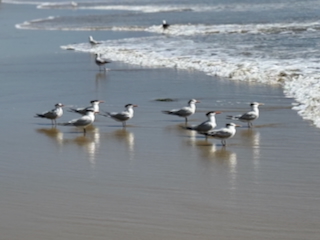
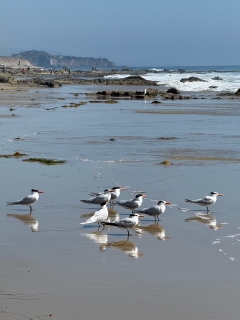
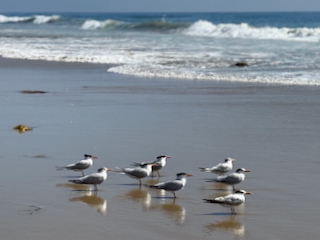
Elegant terns (Thalasseus elegans) populations have declined
due to historical egging and the introduction of mammal predators, and they are listed as a Species of Special Concern in California. Their dispersal is tied
to El Niño events, which impacts their key prey such as the northern anchovy (Engraulis mordax).
| 
-
| 
-
|
-
| 
-
| 
-
|
-
| 
-
| 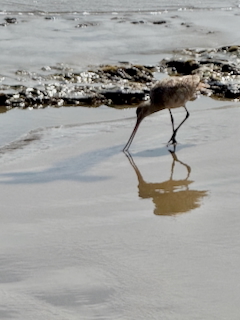
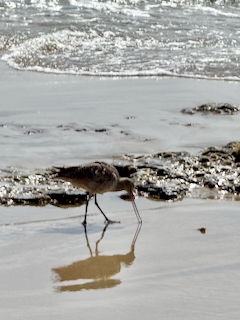
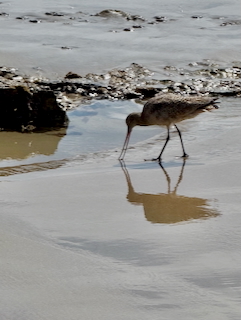
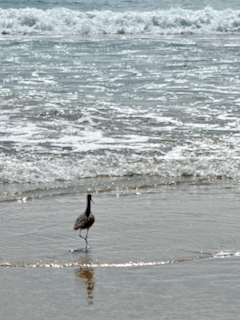
marbled godwit (Limosa fedoa)
|
-
| 
-
| 
-
|
-
| 
-
| 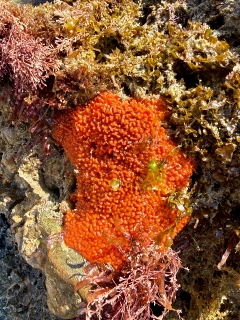
unidentifed sponge (there are multiple orange/red sponge species that can look similar) - see
Marine Sponges of California
|
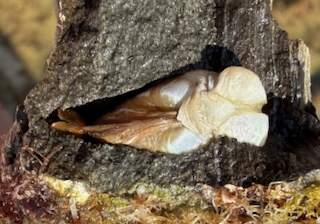
A boring pholad clam, whose rock boring ways were exposed in a rock observed to be
recently broken. Pholads rock their shells back and forth functioning as a fulcrum to bore into soft rock. - see
more complete description of pholad boring
| 
-
| 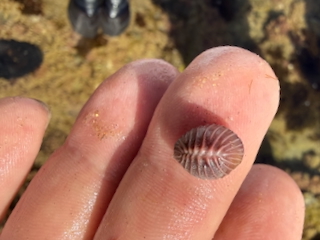
shell of California trivia (Pseudopusula californiana)
|
-
| 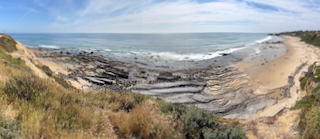
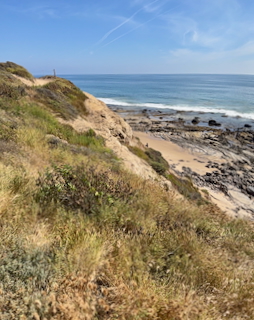
Pelican Point with Treasure Cove in the distance
| 
-
|
 Under Construction!