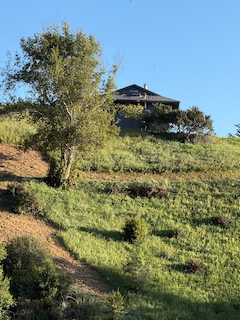
Whale Point cabin at the UC Landels-Hill Big Creek Reserve, where we were staying.
The images here feature some of the familiar plants in the vicinity, and one would think I should know them better considering how frequently I have
visited Big Creek over prior decades. I would appreciate any corrections to my errors in the tentative attempts at identification by a marine zoologist.
| 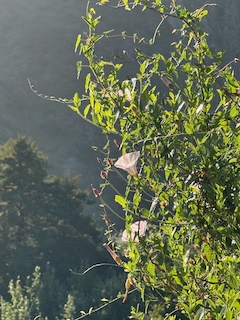
The flowers here are island morning glory (Calystegia macrostegia), family Convolvulaceae.
| 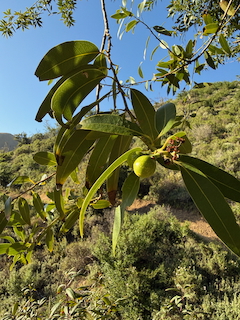
The California bay (also known
as California laurel, bay laurel, or Umbellularia californica), has extremely strong tasting nuts full of pungent oils, like the leaves,
but can be baked for an interesting and less strong snack for the adventurous (see source). The tree is best identified by one's nose by smelling
a leaf, which are used by Californians as a stronger version of the familiar Mediterranean bay leaf (although one should be cautious
with seasoning if serving to guests, some of whom might be senstitive to the California bay leaf). - Source:
reprinted from Margit-Roos Collins' book,
The Flavors of Home at the forage website
|
-
| 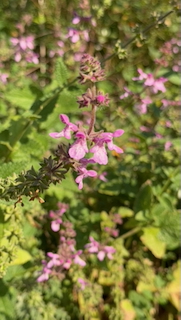
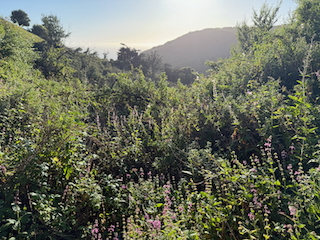
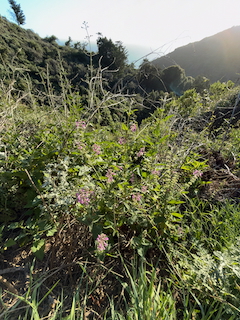
The California hedgenettle (Stachys bullata) is a very common plant at Big Creek.
| 
-
|
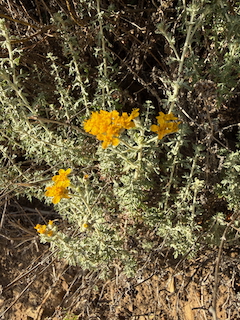
Yellow yarrow (Eriophyllum confertiflorum) (Asteraceae) is native to California and
Baja California.
| 
-
| 
-
|
-
| 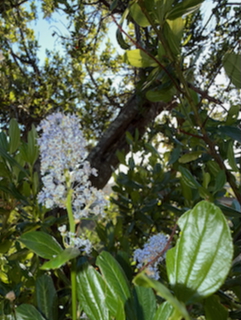
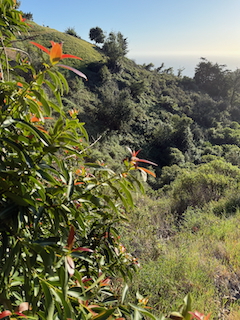
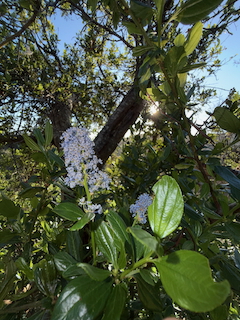
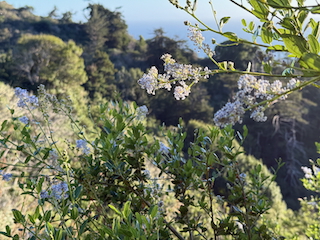
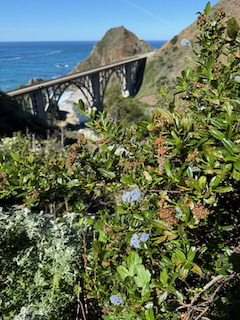
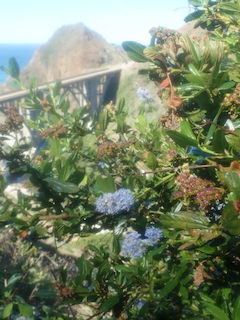
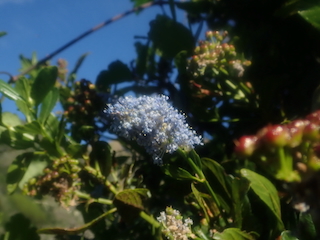
California lilac (Ceanothus thyrsiflorus and C. spp.)
is a dominant bush to tree-like colorful plant (Rhamnaceae) within the coastal region of Big Creek. Former Big Creek steward, Feynner Arias, told me
that he suspected it had been encroaching inland
within the canyons relative to coastal redwoods, likely due to warming climate trends and recent forest fires.
| 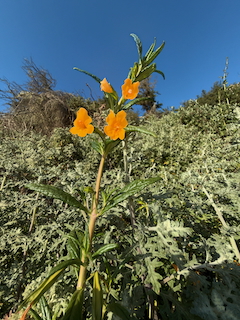
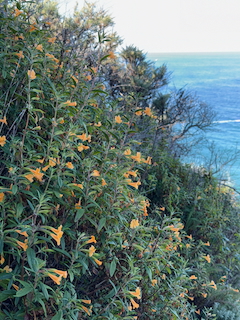
sticky monkey-flower (Diplacus aurantiacus)
|
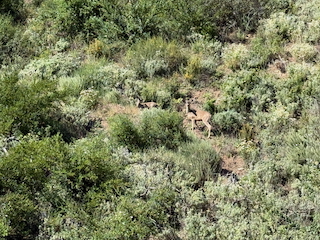
The most common deer seen along the Big Sur coastline is the Columbian black-tailed deer
(Odocoileus hemionus columbianus),
although this is not the only subspecies of the mule deer in this area. The California California mule deer is also present. The black-tailed deer's
(O. h. hemionus) is wider and has mostly black on the top, and the adult deer is smaller, and has a darker coat. The tail of the California mule deer
has a larger rump patch and a thin, white tail with a black tip. These are two of the currently recognized subspecies of the
mule deer (see source) The California mule deer has the broadest range in western North America, from Alaska to Baja California Sur, Mexico,
but the black-tailed deer is the common
mule deer in coastal regions to just north of Vancouver Island in British Columbia, Canada, where it is replaced by the Sitka black-tailed
deer (O. h. sitkensis) on the coast to the north.
- Source: WAFWA Mule Deer Working Group, 2023
| 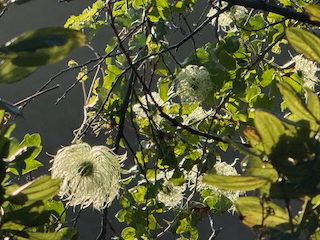
pipestems or chaparral clematis (Clematis lasiantha)
| 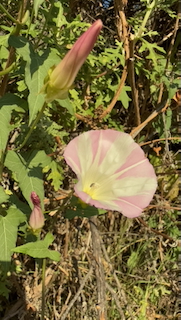
island morning glory (Calystegia macrostegia)
|
-
| 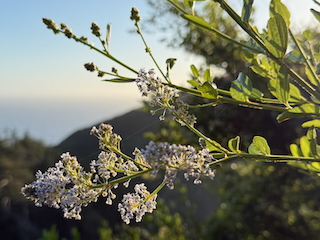
California lilac (Ceanothus thyrsiflorus and C. spp.)
| 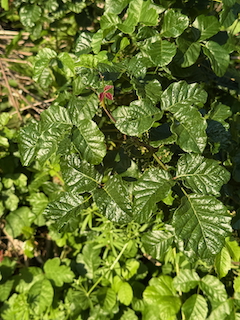
Leaves of three, let it be! Poison oak (Toxicodendron diversilobum)
thrives in most of the Big Creek Reserve. According to Wikipedia, about 80 percent of humans are sensitive to its toxicity, typically
developing immune-mediated skin inflammation known as contact dermatitis. However, it is eaten by the black-tailed deer, California ground squirrels, and western gray squirrels,
and is apparently rich in phosphorus, calcium, and sulfur. Birds eat its berries and seek protection among its cover. - Source:
Wikipedia article on poison oak
|
-
| 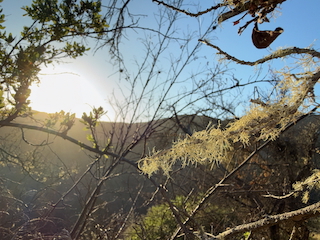
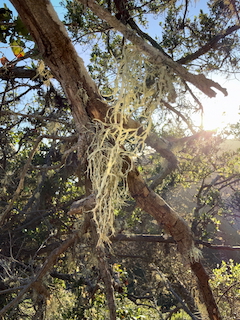
The old man's beard (or lace) lichen (Usnea spp., or
Ramalina menziesii)
is a fruticose lichen
that thrives in the coastal fog belt of the Big Sur coastline.
| 
-
|
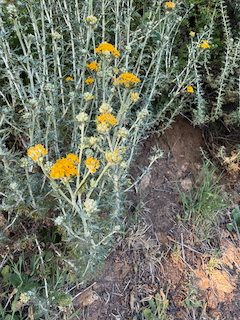
Eriophyllum confertiflorum, commonly known as golden or yellow yarrow,
belongs to the family, Asteraceae, amd is native to California and Baja California.
| 
-
| 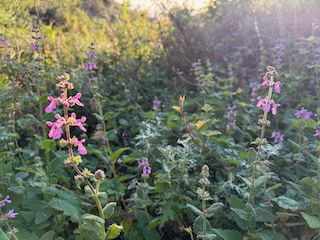
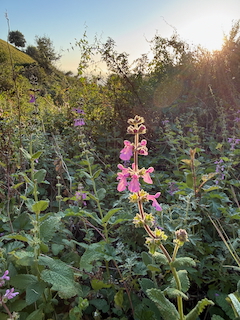
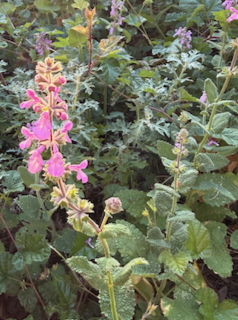
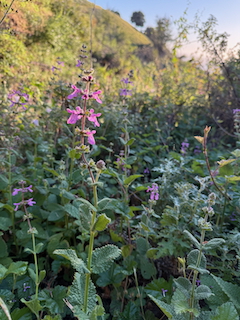
California hedgenettle (Stachys bullata) is a
member of the mint
family (Lamiaceae), a large family with about 7,000 other species, including many noted for their culinary uses such as basil, rosemary, sage, oregano, thyme, and lavender.
These all have square stems, which is not unique to the mint family but its species are by far the most commonly encountered square-stemmed plants,
unless one happens to frequently encounter figworts, St. John's worts, bedstraws, willowherbs, or four-angled spikerushes.
|
-
| 
-
| 
-
|
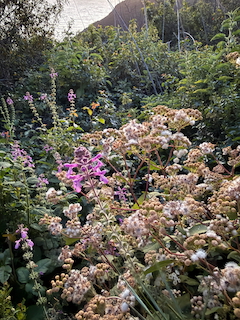
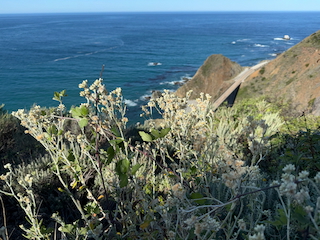
Tentative: mulefat (Baccharis salicifolia)
| 
-
| 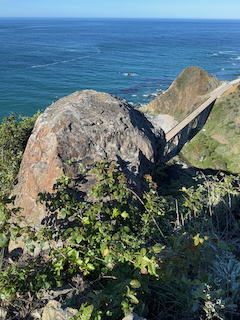
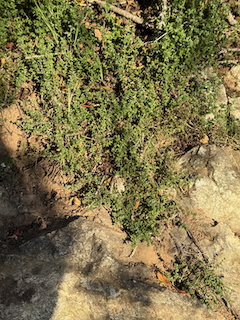
The poison oak (Toxicodendron diversilobum) is taking over my favorite boulder view above Big Creek.
|
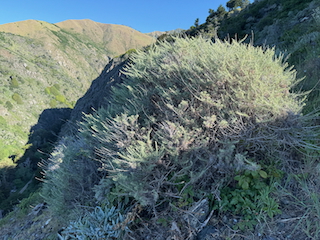
The California sagebrush (Artemisia californica) thrives on dry
sunny habitats on the coast of California and Baja California, and is extremely drought-tolerant.
| 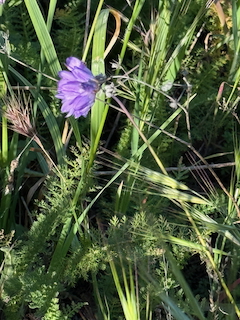
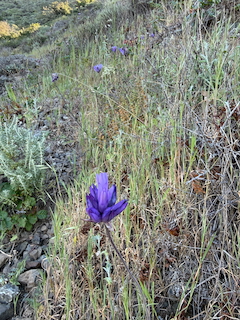
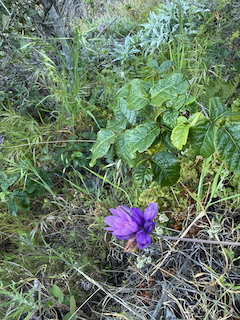
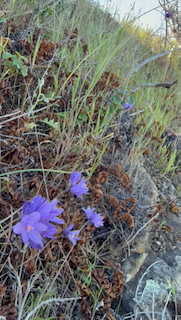
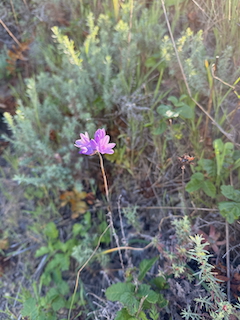
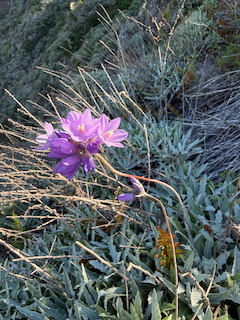
blue dick (Dipterostemon capitatus)
| 
-
|
-
| 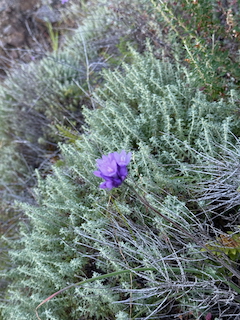
The genus, Dipterostemon, is monotypic within Asparagacee, including only D. capitatus (blue dick).
| 
-
|
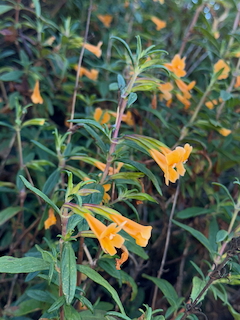
The sticky monkey-flower (Diplacus aurantiacus) is native to the West Coast, from
southwestern Oregon to California's Central Coast. It belongs to the lopseed family (Phrymaceae).
| 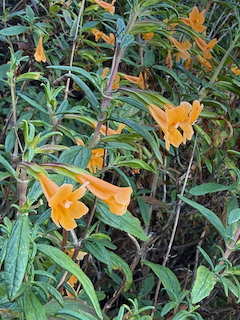
The sticky monkey-flower plant has a close mutualistic relationship with
the checkerspot butterfly, Euphydryas chalcedona, providing it with its principle food source, and with its distribution corresponding
to the life cycle of the butterfly (Mooney et al., 1981).
| 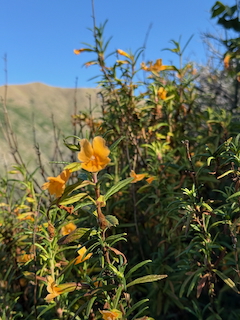
The sticky monkey-flower gets the first part of its name
because its leaves are covered with a resin that helps the plant resist grazing by insects and also helps it resist desiccation.
It gets the second part of its name because its flower looks a bit like a smiling monkey.
|
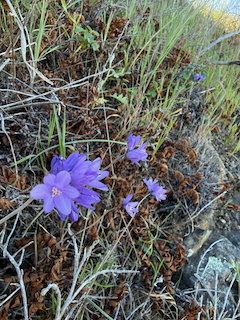
A blue dick (Dipterostemon capitatus), apparently
also known by other common names including wild hyacinth or purplehead. It is native to California and multiple other western states, and also northwestern Mexico.
| 
-
| 
-
|
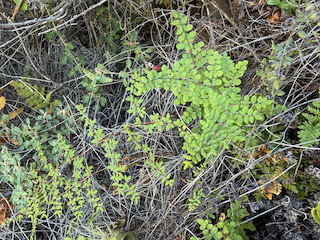
The coffee fern (Pellaea andromedifolia), is a California-native
cliffbrake fern that is drought and sun tolerant. According to Wikipedia (see source), some coffee ferns are diploid and reproduce sexually, while others reproduce from a gamete
that is not fertilized. asexually growing into a triploid or tetraploid fern. -
Source: Wikipedia
| 
-
| 
-
|
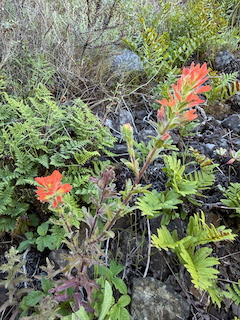
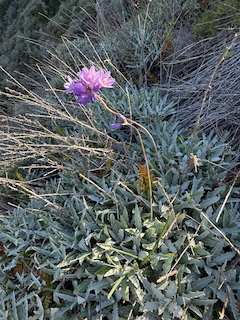
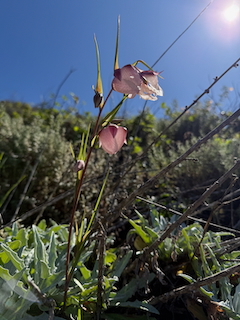
Coast Indian paintbrush (Castilleja affinis) is native
to western-most North American from British Columbia, Canada to Baja California, Mexico.
| 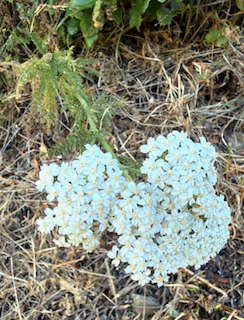
Yarrow, or common yarrow (Achillea millefolium), belongs to Asteraceae, gets up
to 1 m tall, and has a pungent odor.
| 
-
|
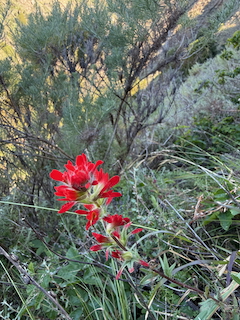
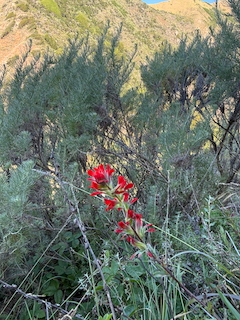
coast Indian paintbrush (Castilleja affinis)
| 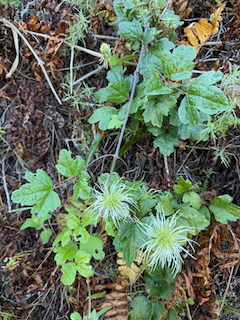
pipestems or chaparral clematis (Clematis lasiantha)
| 
-
|
-
| 
-
| 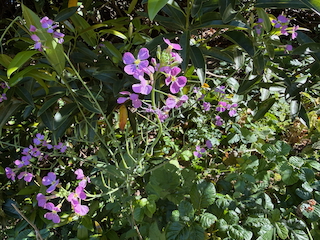
Wild radish (Raphanus sativus) is a non-native annual (or sometimes perennial) flowering plant that
often invades moist areas along roads and elsewhere in California.
|
-
| 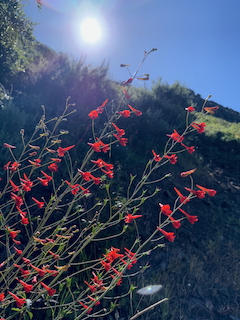
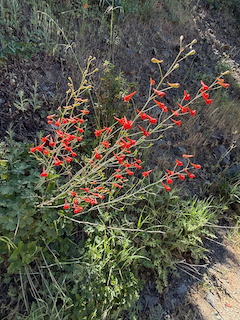
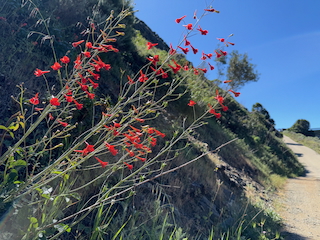
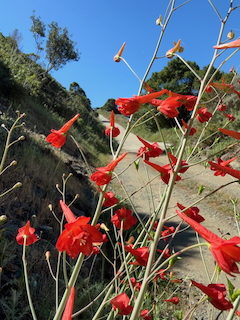
Red larkspur (Delphinium nudicaule) is a
perennial plant belonging to the buttercup family (Ranunculacee). It is a native plant found from Oregon to California's Coast and Sierra
Nevada ranges below about 6,500 feet (2 km) elevation.
| 
-
|
-
| 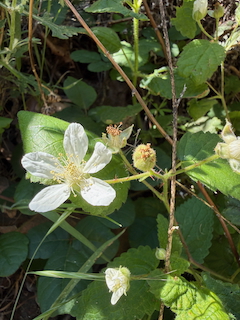
Rubus ursinus, the California blackberry, is mostly found throughout
California and west of the Cascade mountain range in Oregon and Washington, although it can also be found as far east as Idaho, and further north and
south. It is popular as a native plant that does well in gardens.
(calscape.org).
| 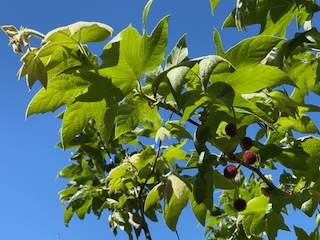
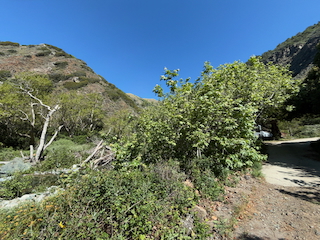
The California sycamore (Platanus racemosa) is a California and
Baja California native tree that grows in riparian
areas such as along Big Creek.
|
California sycamore (Platanus racemosa)
| 
-
| 
-
|
-
| 
-
| 
-
|
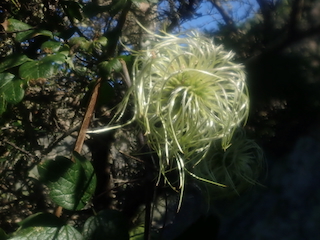
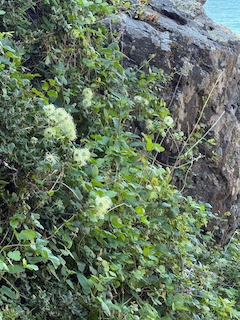
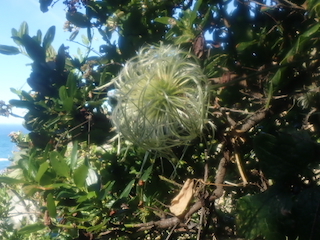
Pipestems or chaparral clematis (Clematis lasiantha) are members of the buttercup family,
Ranunculaceae. They are popular California native vines for planting in gardens (Calscape.org).
| 
-
| 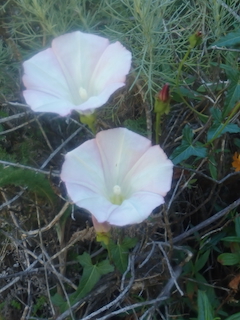
The island morning glory (Calystegia macrostegia) thrives on the coast
of California between Monterey and San Diego.
|
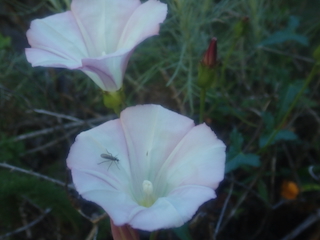
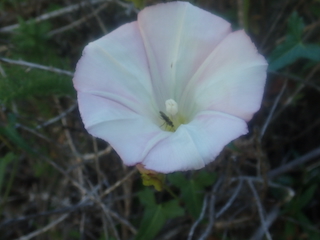
The island morning glory attracts various insects with its
abundant nectar and pollen, especially the native bindweed turret bee (Diadasia bituberculata, but this looked like a fly to me.
| 
-
| 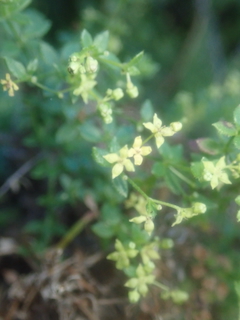
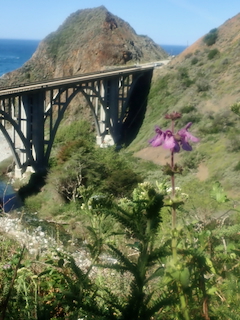
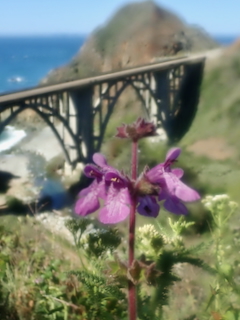
The graceful bedstraw (Galium porrigens) belongs to Rubiaceae, the same family as coffee.
|
-
| 
-
| 
-
|
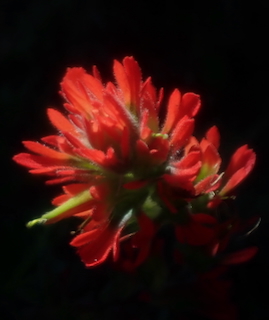
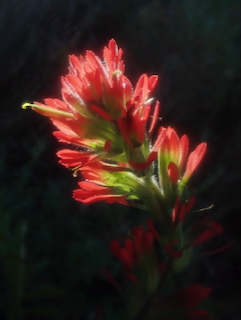
coast Indian paintbrush (Castilleja affinis)
| 
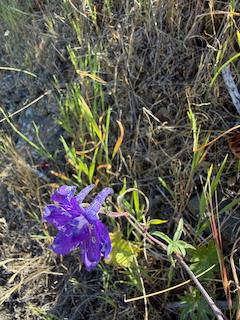
white fairy lantern (Calochortus albus)
| 
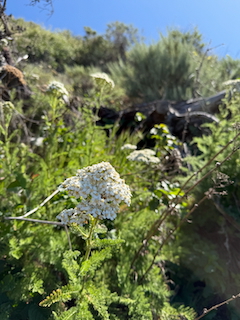
Monterey or Hutchinson's larkspur (Delphinium hutchinsoniae)
|
-
| 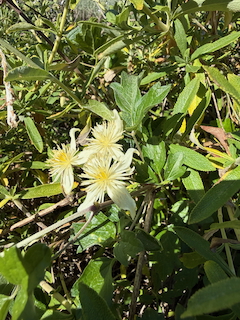
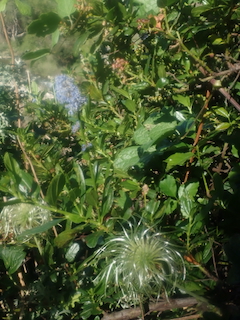
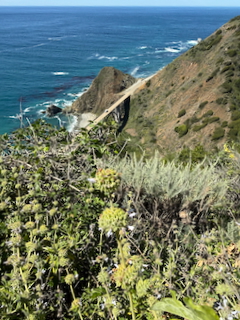
Compared with those above, these more recently bloomed flowers of pipestems or chaparral clematis (Clematis lasiantha) are less fluffy.
| 
-
|
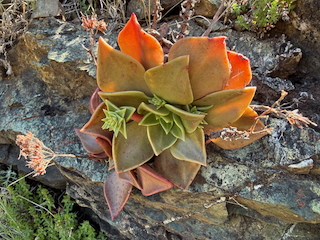
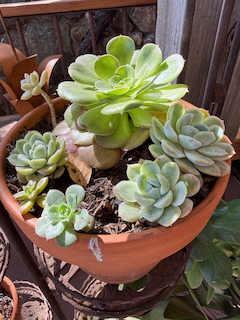
Tentative: Dudleya cymosa, a California native succulent also known as the canyon liveforever.
| 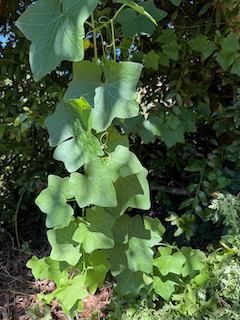
Wild Cucumber (Marah fabacea)
| 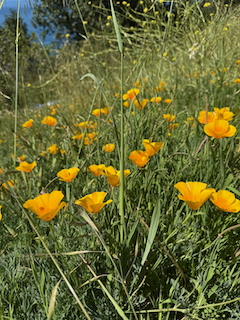
Eschscholzia californica (California poppy) has been California's state flower since 1903.
|
-
| 
-
| 
-
|
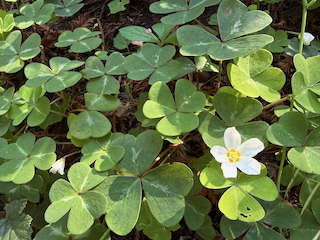
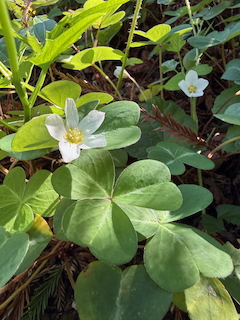
Redwood-sorrel (Oxalis oregana)
is common under the redwoods
at Big Creek.
| 
-
| 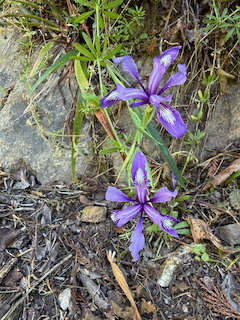
My favorite flower at Big Creek, Douglas iris (Iris douglasiana).
|
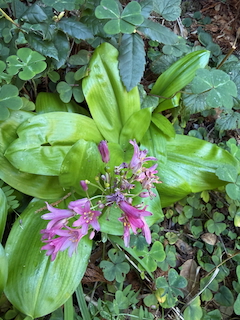
western bluebead lily, Clintonia andrewsiana (Liliaceae)
| 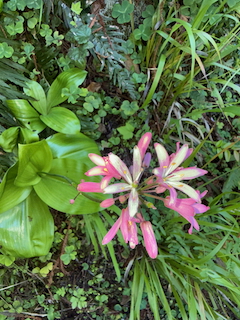
tentative: beaded lily, Clintonia sp. (Liliaceae)
| 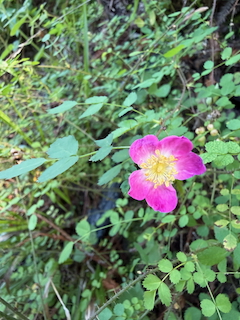
California wildrose (Rosa californica)
|
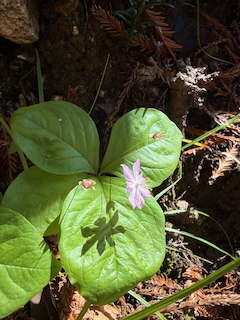
The Pacific starflower (Lysimachia Latifolia), placed by some
in the family, Myrsinaceae, or by others in the subfamily Myrsinoideae within the family Primulaceae.
| 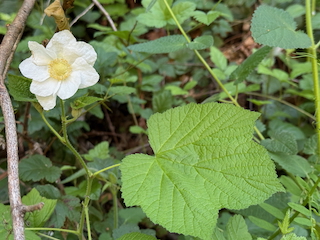
Thimbleberry or backpacker's TP (Rubus parviflorus)
| 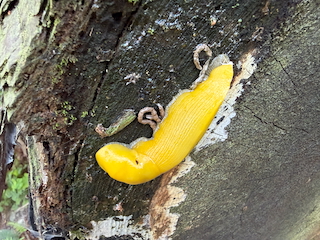
southern Pacific banana slug Ariolimax stramineus
|
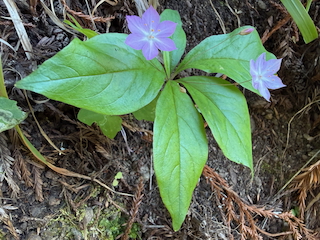
Pacific Starflower (Lysimachia latifolia)
| 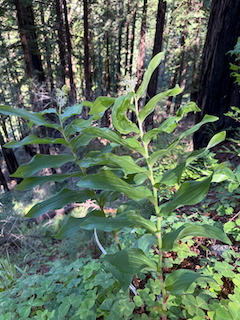
false Solomon's seal (Maiamthemum racemosum)
| 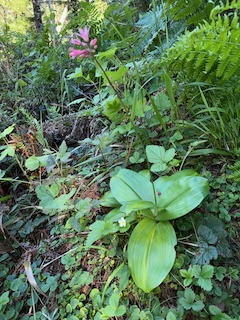
western bluebead lily, Clintonia andrewsiana (Liliaceae)
|
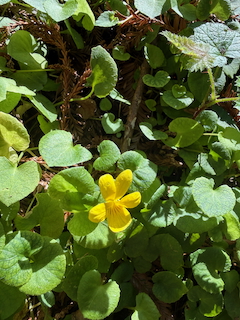
redwood violet (Viola sempervirens)
| 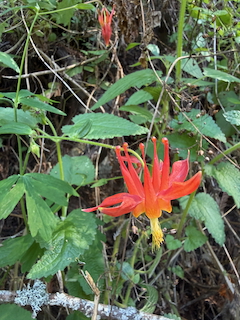
crimson columbine (Aquilegia formosa)
| 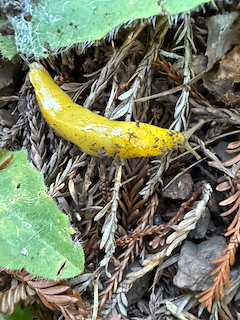
southern Pacific banana slug Ariolimax stramineus
|
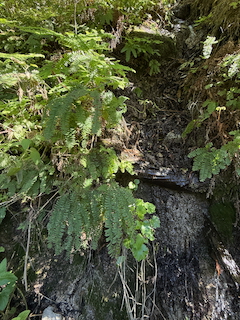
five-finger fern (Adiantum aleuticum)
| 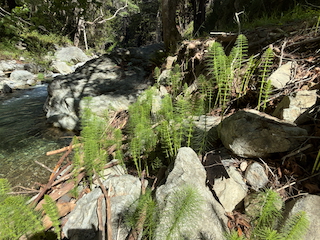
The northern giant horsetail (Equesitum braunii) is native to western
North America, thriving in riparian habitats.
| 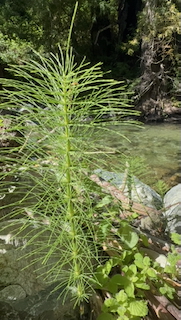
The northern giant horsetail (Equesitum braunii) and other
members of this genus are the only survivors of a rather ancient family, Equisitaceae, which was much more diverse and for about 100 million
years dominated the forests of the Paleozoic era.
|
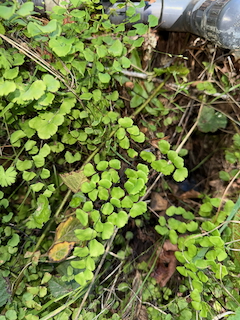
California maidenhair fern
(Adiantum jordanii)
| 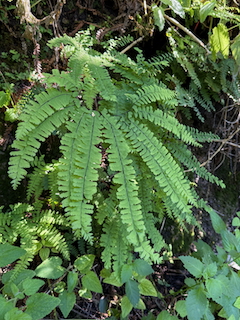
The five-finger fern or western maidenhair fern (Adiantum aleuticum) is closely related to the popular
cultivar known as ladyfinger ferns.
| 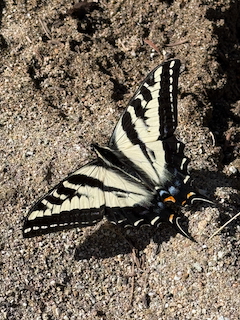
The pale swallowtail butterfly (Papilio eurymedon) is found throughout
much of western North America, including the coast from southern British Columbia to northern Baja California. It has broader black stripes and a pale whitish color
compared to the western tiger swallowtail (Papilio rutulus), which is yellow with thinner black stripes.
|
 Under Construction!