Experiment 4 Results:
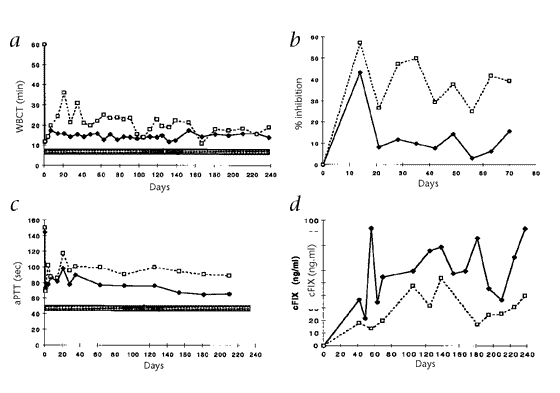
The two hemophilia B dogs transfected with rAAV-cFIX are represented as dog B89, (dashed lines), and the other dog is B84, (solid lines).
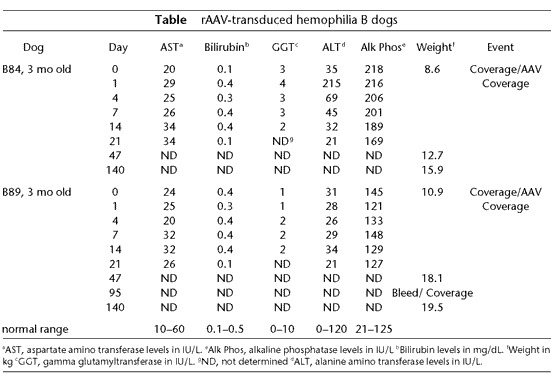
The table listing the blood chemistry results on the 2 hemophilia B dogs consist of a panel of tests that monitor liver function.

What would liver enzymes and tests like a biliruben tell you?
The chemistries would be abnormal if there was some kind of transfusion reaction or immune response elicited from the transfection with the rAAV-cFIX.
Over a three week period the values for all the tests are predominately normal except for the ALT level in dog B84. The investigators of this study give no explanation for this result, but deem it clinically insignificant. The raised Alkaline Phosphatase levels they attribute to bone growth.
What is the signifiance of the Whole Blood Clotting Time assay and what would be the predicted results with a Factor IX Deficiency?
Factor IX deficiencies cause a delay in the WBCT.
*The test results show an initial low WBCT, then a spike to a more elevated WBCT, then a subsequent drop. The values then remained only slightly above normal for the remainder of the study,(240 days).
What could account for the spike in the WBCT?
A reason for the spike in WBCT levels around day 20 could be due to the Factor IX levels from the plasma infusion disappearing and an initial lag period before the transduced cFIX becomes effective. The PTT levels are basically a similar test to confirm the WBCT assay results.
*The most significant results are the bleeding time assays, correlated to the biological activity of the cFIX levels. Dog B84 expresses cFIX levels of 30-95ng/ml, which is calculated as having full biological activity. Dog B89 has cFIX antigen levels of 10-45ng/ml and has a calculated biological activity level of 0.5%.
What could account for the differences of these levels in the two dogs? How do you think this would affect their bleeding times assays?
Both dogs in the study show an improvement in their bleeding times as evidenced by their improved WBCT and aPTT results. Dog B84 shows a greater improvement in the correction of its bleeding times. This could be due to the differences in their weights during the study. Possibly a larger dose of infusion with cFIX would correct this discrepancy
